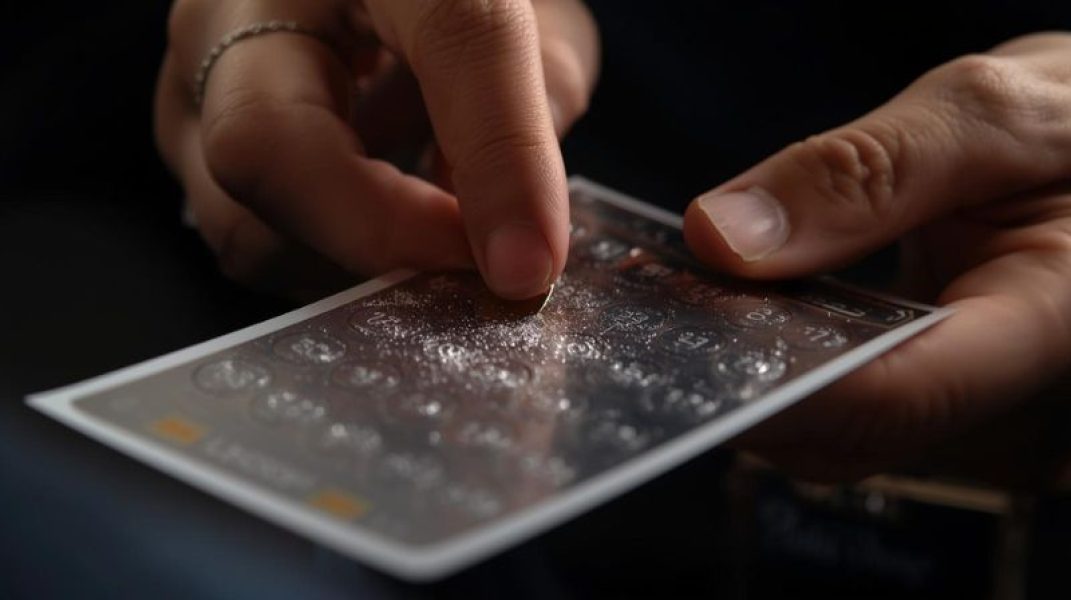
There’s not much skill involved with playing scratchcards – you pick one, scratch it, and hope for the best. These cards are based on luck alone, with the grand prize hidden on the winning one long before you buy it.
In 2003, Toronto geologist Mohan Srivastava announced a controversial claim that he could detect the winning cards by observing the patterns of certain games. This theory became known as the Singleton Method, and for a brief time, it shook the lottery industry to its core.
What Is the Singleton Method?
Srivastava noticed that some “tic-tac-toe”-style scratchcards displayed several numbers on the front before scratching. He then assumed that if a number appeared once among the visible numbers (i.e. a singleton), the probability of it matching the winning number underneath the coating would be greater.
If three of these singletons lined up one after the other in a row, column, or diagonal, the ticket was very likely a winner. When he tested this theory, Srivastava observed that the method worked on cards from a particular game nine out of ten times. He then presented his findings to the Ontario Lottery and Gaming Corporation (OLGC), which immediately withdrew all the tickets they thought were flawed.
Why It Worked and Why It Doesn’t Now
Although it does sound like magic, the Singleton Method was nothing more than a printing flaw. As is common with scratchcards, each card batch contains a set number of winners. The only anomaly with scratchcards Srivastava had analysed was that the pattern of printed numbers followed a predictable rule. After learning of this flaw, the card manufacturers changed their design process to prevent this error from happening again.
Today’s scratchcards are far more secure because they use:
- Randomised number generation and layout shuffling
- Encrypted serial codes that prevent mapping patterns
- Third-party audits to test fairness and unpredictability
These improvements mean the Singleton Method no longer works on cards produced according to the latest manufacturing protocols.
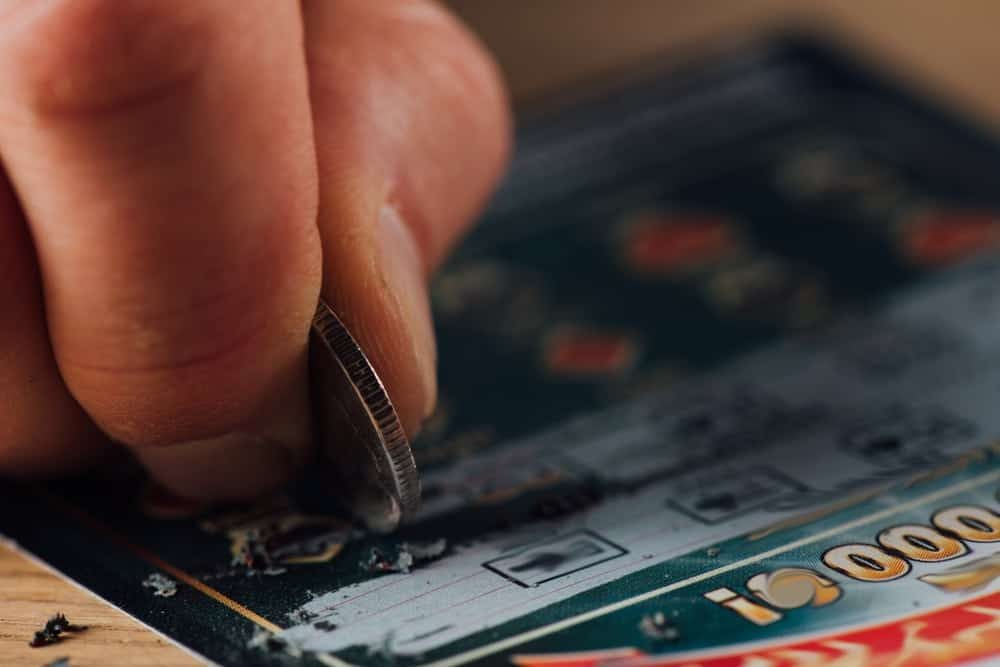
Limits of the Singleton Method
Even when it was first proposed, the method had various shortfalls:
- It only applied to “extended play” games with visible numbers.
- You needed to inspect the card before purchase. This practice is no longer allowed at most stores.
- “Winning” cards often returned very small prizes.
- It never worked for online scratch games, which use certified RNG software.
Online vs Real-Life Scratch Cards
| Category | Real-Life Scratch Cards | Online Scratch Games |
| Where You Play | Sold at gas stations, convenience stores, and lottery kiosks | Available 24/7 on licensed casino or lottery websites |
| Result Generation | Pre-printed outcomes with limited randomness per ticket batch | Determined by Random Number Generators (RNGs) that ensure independent, fair results |
| Transparency | Results hidden until scratched; payout odds printed on the ticket | RTP (Return-to-Player) percentages and fairness audits are publicly listed |
| Security Measures | Physical printing controls and serial numbers prevent counterfeiting | Encrypted systems and third-party RNG testing ensure fairness |
| Experience | Tactile and social – you physically scratch and reveal | Fast, convenient, and playable from home or a mobile device |
| Singleton Method Applicability | Once worked on older cards; no longer valid today | Not applicable – online results are entirely randomised |
A Lesson in Lottery Logic
To sum it up, the Singleton Method appeared to “prove” that random games hide patterns until someone finds them. Yet, the gambling industry is very adaptable. Within a short time, the possibility of applying this method was eradicated. It also spurred the industry to develop scratchcards that are more random today than they ever were in the past.
Final Thoughts
The Singleton Method was a short-lived, yet fascinating chapter in the history of gambling. It showed us that odds can be beaten, even if it was for a very brief time. Sadly, this method is not a foolproof winning strategy. With advanced ticket printing and online RNG systems, scratch games today are built to be unpredictable – just as they should be.