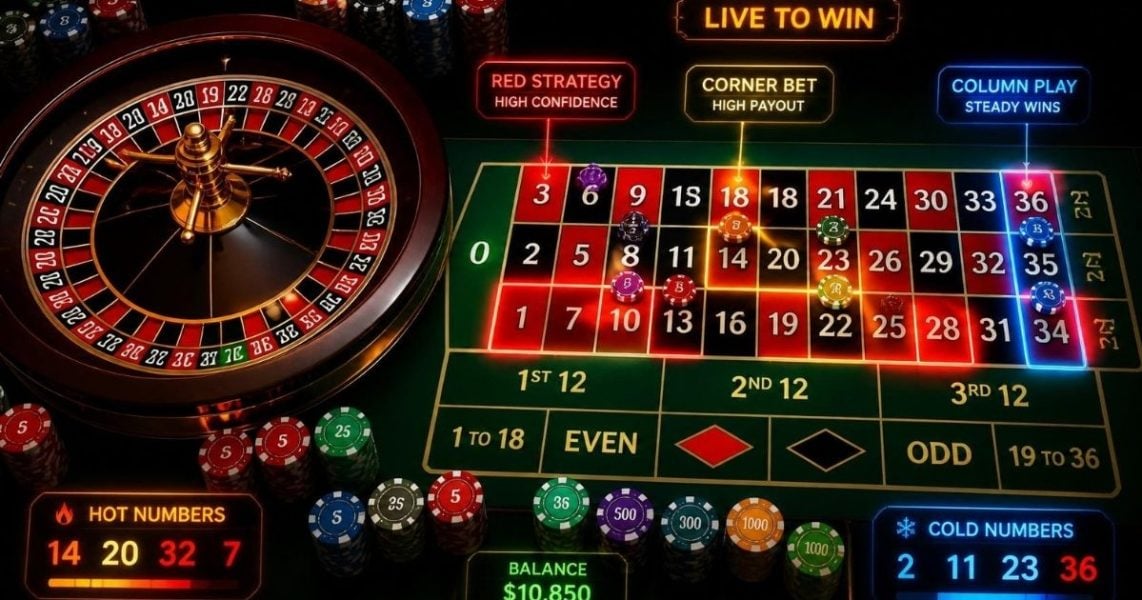
No roulette strategy or betting system beats the house edge. Systems like the Martingale, D’Alembert and Fibonacci change how your wins and losses are spread out, and can produce short runs of small profit, but none of them lowers the built-in 2.70% edge on a European wheel. The only genuine improvements are choosing a low-edge wheel and managing your bankroll.
Every roulette strategy worth the name starts from one hard fact: betting systems organise your bets, they do not beat the game. Each popular system is a staking pattern that decides how much to wager after a win or a loss. They can make a session feel structured and even deliver frequent small wins, but because each spin is independent and the house edge never changes, no pattern turns a losing game into a winning one over time. For the game itself, start with our complete guide to roulette.
- No system beats the edge. Staking patterns rearrange wins and losses but never remove the house’s built-in margin.
- The Martingale hides its risk. It wins often in small amounts, then a single losing streak wipes out all those gains at once.
- Table limits are the wall. Doubling systems eventually hit the maximum bet, and you can no longer chase the loss back.
- What helps is real. A single-zero or French wheel, a set budget and even-money bets make your money last longer.
Do roulette betting systems actually work?
No betting system works in the sense of turning roulette into a profitable game. This is the most important thing to understand before you try one. Because every spin is independent and each bet carries the same house edge, no way of raising or lowering your stake changes the long-run result. A system can make wins more frequent or losses more dramatic, but the average outcome stays negative.
What systems do offer is structure and, in the short term, a particular shape of results. Negative-progression systems like the Martingale win small and often but risk a rare, large loss. Positive-progression systems like the Paroli do the opposite, risking little and occasionally winning big. Neither is better than the other in expected value, because both are anchored to the same edge. The honest framing is that betting systems are ways to have fun with your bankroll, not tools to defeat the wheel.
The main roulette betting systems
Five systems account for almost every roulette strategy you will read about. Each changes the staking pattern in a different way, and each runs into the same house edge. Here is how they work on roulette and where they fall short; the simulator below lets you test any of them against your own numbers.
The Martingale is the doubling-down system: you bet on an even-money option like red, and every time you lose you double the next bet, so a single win recovers all prior losses plus a profit equal to your starting stake. It delivers a steady trickle of small wins until a losing streak arrives, and doubling grows fast: a CA$5 bet becomes CA$160 after five losses and CA$1,280 after eight, so the table maximum or your bankroll stops you long before the streak does. Our Martingale strategy guide covers the maths in full.
The Paroli flips the Martingale: you double after a win instead of a loss, aiming to ride a hot streak, then reset after a set number of wins. It risks far less of your own money because you are pressing winnings, which makes it gentler on a bankroll. The trade-off is that it needs consecutive wins to pay off, and those are just as unpredictable as losses.
The D’Alembert is a gentler negative-progression system. Instead of doubling, you raise your bet by one unit after a loss and lower it by one after a win. That keeps the bets far smaller than a Martingale during a bad run, so it lasts longer, but the slower recovery means a losing streak still leaves you behind, and the edge still applies.
The Fibonacci betting system raises your stake along the famous number sequence (1, 1, 2, 3, 5, 8 and so on) after each loss, then steps back two places after a win. It grows more slowly than the Martingale, which softens the streak risk, but it can leave you increasing bets while still down overall, and it does nothing to the underlying odds.
The Labouchere, or cancellation system, has you write down a sequence of numbers and bet the sum of the first and last, crossing them off on a win and adding your loss to the end. It is the most involved system to run and can string together small wins, but a long losing run makes the list and the bets balloon, with the same negative expectation waiting at the end.
| System | Type | Streak risk | Beats the edge? |
|---|---|---|---|
| Martingale | Negative progression | Very high | No |
| Paroli (Reverse) | Positive progression | Low | No |
| D’Alembert | Negative progression | Moderate | No |
| Fibonacci | Negative progression | Moderate to high | No |
| Labouchere | Negative progression | High | No |
For a deeper look at progression staking across all casino games, see our guide to casino betting systems.
Roulette strategy simulator: test any system against the wheel
Pick a system, enter a starting bet, your bankroll and the table maximum, and see how long a losing streak each approach survives, how big the bets get, and how likely that streak really is. The flat-betting result is the baseline every system should be judged against.
Why no roulette system beats the house edge
No betting system beats roulette because each spin is independent and carries the same fixed house edge, so no sequence of bets can add up to a positive expectation. A losing spin does not make the next spin more likely to win, which means past results carry no useful information. Rearranging your stake sizes cannot manufacture an advantage that the numbers do not contain.
Every negative-progression system runs into the same two walls: the table maximum and your own bankroll. Because a losing streak of six on an even-money bet happens far more often than intuition suggests, roughly once in every 55 attempts on a European wheel, the rare big loss arrives sooner than players expect and cancels the long trickle of small wins. That is the mechanism behind every failed system, and it is why the only durable choices in roulette sit outside the betting pattern entirely.
The smart roulette strategy that does work
The genuinely smart roulette strategy is not a betting system at all: it is choosing the cheapest game and controlling how you play it. These moves do not make roulette a winning game, but they lower your cost and stretch your entertainment, which is the realistic goal.
- Play a single-zero wheel. A European or French wheel costs 2.70% or less against the American wheel’s 5.26%. This is the single biggest edge you control.
- Prefer even-money bets for longevity. Red, black, odd or even win close to half the time, so your bankroll lasts longer even though the edge is unchanged. See our odds and payouts guide for the full picture.
- Set a budget before you start. Decide what you are willing to lose and treat it as the price of the entertainment. Solid bankroll management matters more than any system.
- Keep sessions short. The longer you play, the more the house edge grinds. Short sessions keep variance on your side.