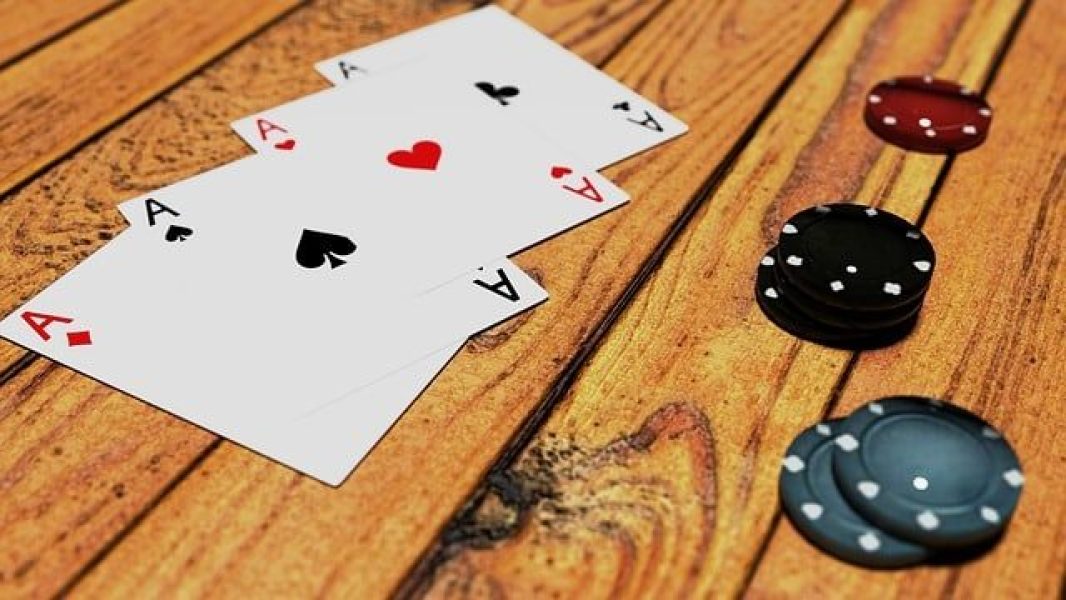
To play baccarat you bet on one of two hands, the Player or the Banker, backing whichever will total closer to nine. Each hand gets two cards, only the last digit of the total counts, and fixed rules decide any third card automatically. You make no decisions after betting, so it is one of the simplest casino games to learn.
Learning how to play baccarat takes minutes: the game has a reputation for being complicated and exclusive, yet it is one of the easiest in any casino lobby. You place a single bet, the cards are dealt, and the rules take over from there. The three bets and the card values are quick to pick up, the only part that ever trips anyone up is the third-card rule, and the resolver further down settles any hand for you, so the real decision is which bet to back and which one to leave alone.
- Three bets, one choice. You bet on the Player, the Banker or a Tie, then wager on which hand lands closer to nine.
- Only the last digit counts. Aces are one, cards two to nine are face value, tens and faces are zero, and totals wrap at ten.
- The Banker bet is best. It carries the lowest house edge at about 1.06 percent; the Tie, at roughly 14.4 percent, is a trap.
- You make no decisions. Whether a third card is drawn follows fixed rules, and the tool below resolves any hand instantly.
What is baccarat?
Baccarat is a card game where you bet on which of two hands, the Player or the Banker, will finish with a total closer to nine. Despite the names, neither hand belongs to you: they are simply the two sides you can back, and the house deals both according to fixed rules. Your only job is to place a bet before the cards come out.
That is what sets baccarat apart from a game like blackjack, where your choices drive the outcome. In baccarat there are no hits, stands or splits to weigh up. Once your chips are down, the result is settled entirely by the cards and the drawing tableau, which is why the game moves quickly and why it suits players who want action without constant decisions. The modern version most Canadians play is called punto banco, and you can read how it differs from the older forms in our guide to baccarat variants.
Baccarat rules: the three bets and card values
The rules of baccarat come down to two things: what you can bet on, and how a hand is scored. There are exactly three bets. The Player bet wins if the Player hand is closer to nine and pays even money. The Banker bet wins if the Banker hand is closer and also pays even money, minus a five percent commission. The Tie bet wins only if both hands finish level, and pays eight to one. Almost every online table deals from an eight-deck shoe, and the house-edge figures on this page assume that.
Scoring uses only the last digit of a hand’s total, a system called modulo-ten. Here is what each card is worth:
| Card | Value |
|---|---|
| Ace | 1 point |
| 2 through 9 | Face value (2 to 9 points) |
| 10, Jack, Queen, King | 0 points |
Because only the last digit counts, a hand of 7 and 8 totals 15, which scores as 5, not fifteen. A 9 and 6 totals 15 and also scores 5. The highest possible hand is a natural nine, and there is no busting: totals simply wrap around. Once you are comfortable with values, the full breakdown of each bet’s return sits in our baccarat odds and house edge guide.
How to play baccarat step by step
A round of baccarat, called a coup, follows the same sequence every time. Learning it once means you can join any table, RNG or live dealer, and know exactly what is happening.
- Place your bet. Choose Player, Banker or Tie, and put down your chips before the deal.
- The deal. Two cards go to the Player hand and two to the Banker hand, all face up.
- Check for a natural. If either hand totals 8 or 9 on those first two cards, that is a natural, both hands stand, and the round ends immediately.
- The Player hand draws. If there is no natural, the Player hand follows its rule: it draws a third card on 0 to 5 and stands on 6 or 7.
- The Banker hand draws. The Banker then acts according to the tableau, which depends on its own total and, if the Player drew, the value of that third card.
- Settle the bets. The hand closer to nine wins. Winning Player bets pay even money, Banker bets pay even money minus commission, and a matched total pays the Tie.
Notice that steps four and five happen on their own. You never choose whether to draw; the dealer applies the rules for both hands. That automation is the heart of baccarat, and it is why the only skill in the game is choosing which bet to back, covered in our baccarat strategy guide.
The third-card rule explained
The third-card rule is the only part of baccarat that trips people up, and the good news is you never have to apply it yourself. It is worth understanding anyway, because it explains why hands play out the way they do. It splits into a Player rule and a Banker rule.
The Player rule
The Player hand is simple. With a two-card total of 0 to 5 it draws a third card. With 6 or 7 it stands. With 8 or 9 it is a natural and the hand is already over. That is the whole Player rule.
The Banker rule
The Banker rule is where the confusion lives. If the Player stood, the Banker simply draws on 0 to 5 and stands on 6 or 7. But if the Player drew a third card, the Banker’s move depends on both its own total and the exact value of that Player third card, as set out below.
| Banker total | Banker draws a third card when the Player’s third card is… |
|---|---|
| 0, 1, 2 | Always draws |
| 3 | Any card except 8 |
| 4 | 2, 3, 4, 5, 6 or 7 |
| 5 | 4, 5, 6 or 7 |
| 6 | 6 or 7 |
| 7 | Never draws, always stands |
None of this needs memorising to play. It runs automatically on every hand, and the resolver in the next section applies it for any starting totals, showing exactly which hand draws, why, and how the hand finishes.
Third-card rule resolver
Set the Player and Banker two-card totals below. If a hand draws, pick the value of its third card, and the tool applies the official tableau to show whether each hand draws or stands, the reason, and then the final totals and the winner.
Baccarat explained simply
If you take away one thing, make it this: bet the Banker. Across thousands of hands the Banker bet wins slightly more often than the Player, and even with the five percent commission it carries the lowest house edge of the three bets. In our own sessions at live dealer tables, sticking to the Banker is the single habit that keeps a bankroll steady the longest.
Just as important is what to avoid. The Tie pays a tempting eight to one, but it lands under ten percent of the time and hands the house an edge of roughly 14.4 percent, far worse than either main bet. Treat it as a novelty, not a plan. The same caution applies to the flashy baccarat side bets, which pay big but carry steep edges. Set a budget before you start, keep your unit size small relative to your bankroll, and remember that baccarat is entertainment with a built-in cost, not a way to earn.
Playing baccarat online in Canada
Baccarat is one of the most widely available games at online casinos serving Canada, in both instant software versions and live dealer studios where a real croupier deals to a streamed table. You can play in Canadian dollars, start at low stakes while the sequence becomes second nature, and bet on Player, Banker or Tie with the same three options every table offers. In the regulated markets, AGCO-registered Ontario casinos and AGLC-registered Alberta casinos publish each table’s rules and commission, so the Banker terms are easy to confirm before you bet. For a closer look at formats and what to check, see our guide to online and live baccarat in Canada.