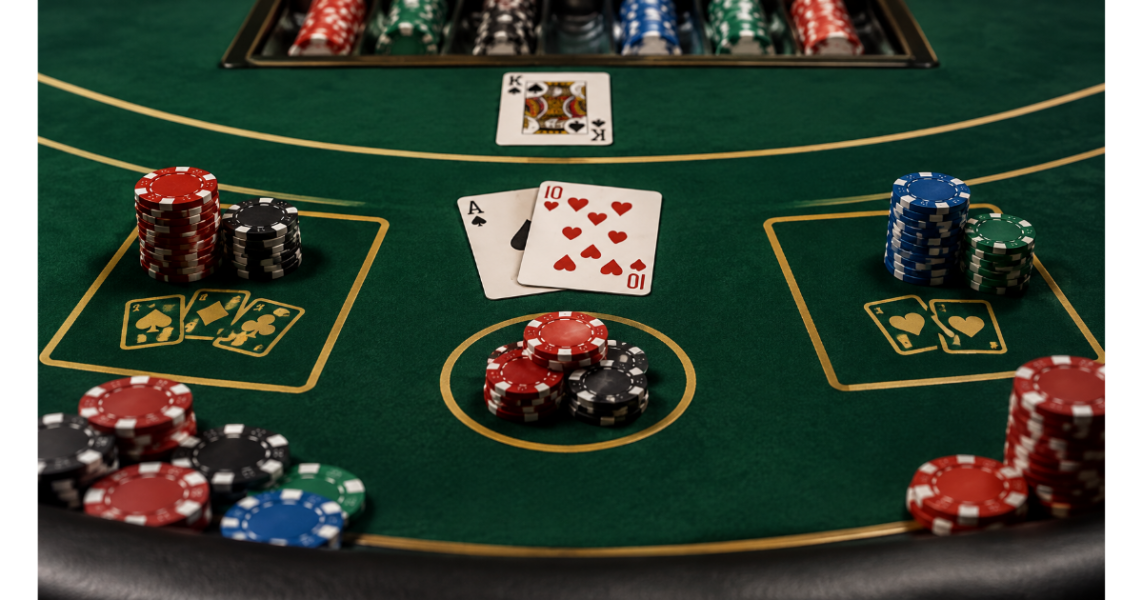
Blackjack side bets are optional wagers placed next to your main hand that pay on specific card combinations: 21+3 pays when your two cards and the dealer’s up card make a poker hand, Perfect Pairs pays when your first two cards match. They pay up to 1,000 to 1, but their house edges run from about 2.5% to 25%, against roughly 0.5% on the main game, so they are entertainment, not strategy.
Blackjack side bets are the small extra betting circles next to your main bet, and almost every online table now has at least two of them. This guide explains how each one works, what it pays and, more usefully, what it costs: 21+3 and Perfect Pairs in detail, then every other side bet you will meet at Canadian online and live tables, from Hot 3 and Bust It to Lucky Ladies and Match the Dealer, with typical house edges for each. There is also a league table that converts those edges into dollars per hour at your stake. It builds on our complete guide to blackjack.
- Side bets are settled on the deal, separately from your hand. You can win 21+3 and still lose the blackjack hand, or the reverse.
- 21+3 and Perfect Pairs are the two you will see everywhere, with typical house edges of about 3% and 4%.
- The bigger the top prize, the worse the bet. Lucky Ladies pays 1,000 to 1 and keeps roughly a quarter of everything wagered on it.
- A C$5 side bet on every hand costs more than the main game does. At 100 hands an hour, 21+3 at C$5 costs about C$16 an hour; a C$25 main bet with basic strategy costs about C$12.50.
What are blackjack side bets?
A blackjack side bet is an optional wager you place before the cards are dealt, in a separate betting spot beside your main bet. It wins or loses on a specific combination of cards, usually your first two cards, sometimes with the dealer’s up card added, and it is settled as soon as those cards are on the table. Nothing you do afterwards, hitting, standing or splitting, changes the result, and the result has no effect on your main hand.
That independence is the point to hold on to. Blackjack side bets are not part of blackjack strategy; they are separate games that happen to use the same cards, each with its own odds and its own house edge. The main game, played to basic strategy, keeps about 0.5% of what you bet. Every side bet keeps more, because the big headline payouts are funded by paying less than true odds on everything else.
One side bet is older and more common than all the others: insurance, offered whenever the dealer shows an Ace. It behaves differently enough, and comes up often enough, that it has its own page: our guide to blackjack insurance explains why basic strategy says decline it. Everything below covers the rest.
What is 21+3 in blackjack?
21+3 is a blackjack side bet that turns your first two cards plus the dealer’s up card into a three-card poker hand. If those three cards make a flush, a straight, three of a kind, a straight flush or suited three of a kind, the bet wins; anything else loses. The name is literal: 21 for the blackjack hand, plus three cards for the poker hand. It was devised by Derek Webb, the creator of Three Card Poker, and it is now the default side bet at most online and live tables.
Paytables vary by casino, and the paytable is what sets the house edge. The most common version online pays as follows on a six-deck shoe.
| Three-card hand | Example | Typical payout |
|---|---|---|
| Suited three of a kind | Q♥ Q♥ Q♥ | 100:1 |
| Straight flush | 7♠ 8♠ 9♠ | 40:1 |
| Three of a kind | 9♥ 9♠ 9♦ | 30:1 |
| Straight | 4♣ 5♥ 6♠ | 10:1 |
| Flush | 2♦ 8♦ K♦ | 5:1 |
With that paytable the 21+3 house edge is about 3.2%, roughly six times the main game. Older land-based versions paid a flat 9:1 on any winning hand and were similar in cost. A flush is by far the most common win, so most of the time a winning 21+3 bet returns 5:1 rather than the three-figure prize on the sign. Aces count high or low for straights, so A-2-3 and Q-K-A both qualify.
Perfect Pairs blackjack side bet explained
Perfect Pairs is a blackjack side bet that pays when your first two cards are a pair, with the prize rising the more alike they are. A mixed pair is two cards of the same rank in different colours, a coloured pair shares a colour but not a suit, and a perfect pair is the same rank and the same suit, which is only possible in a multi-deck shoe. The dealer’s cards play no part.
| Pair type | Example | Typical payout |
|---|---|---|
| Perfect pair (same suit) | J♠ J♠ | 30:1 (some tables 25:1) |
| Coloured pair (same colour) | J♠ J♣ | 10:1 (some tables 12:1) |
| Mixed pair (different colours) | J♠ J♥ | 5:1 (some tables 6:1) |
On a six-deck shoe with the 30/10/5 paytable the Perfect Pairs house edge is about 4%, and other paytables push it anywhere from about 3% to 11%. You will be dealt some kind of pair roughly one hand in 13, and a perfect pair only about one hand in 60, which is why the 30:1 top line is so rarely paid. At live tables the bet is often bundled with 21+3 so that both can be placed with one click.
Every other blackjack side bet you will meet
Beyond the big two, side bets come and go with each game studio and each casino floor. These are the ones Canadian players are most likely to find at online, live dealer and land-based tables, with the card combination each one pays on and a typical house edge. The edge figures are for common paytables; the paytable on your table decides the real number, so check it before you play.
Hot 3
Your two cards plus the dealer’s up card totalling 19, 20 or 21. A plain 19 pays 1:1, a suited 21 pays 20:1 and three suited sevens pay 100:1. Very common at live dealer tables in Canada.
Any Pair
The live-dealer cousin of Perfect Pairs with just two tiers: a mixed pair pays about 8:1 and a suited pair about 25:1. Simpler paytable, similar cost.
Bust It
A bet that the dealer busts, paying more the more cards it takes: 1:1 on three cards, rising to 250:1 if the dealer needs eight or more. It loses outright whenever the dealer makes a hand.
Buster Blackjack
The RNG and casino-floor version of the same idea. Payouts climb with the dealer’s card count, and most paytables add a bonus if you hold a blackjack when the dealer busts.
Lucky Lucky
Your two cards plus the dealer’s up card totalling 19, 20 or 21, topped by suited 7-7-7 at around 200:1. One of the cheaper side bets, and the model Hot 3 was built on.
Match the Dealer
Pays when one or both of your first two cards match the dealer’s up card by rank, roughly 4:1 for a plain match and 9:1 for a suited one, with both cards matching paying more.
Royal Match
Pays about 2.5:1 if your first two cards are suited and 25:1 for a suited King and Queen, the “royal match”. A simple bet with a surprisingly high cost on six decks.
Blazing 7s
Counts the sevens among your first two cards and the dealer’s up card, with three suited sevens hitting a progressive jackpot. The edge moves with the size of the jackpot meter.
King’s Bounty
Pays when your first two cards total 20, from about 4:1 for an unsuited 20 up to 1,000:1 for a pair of King of spades with a dealer blackjack.
Lucky Ladies
Also pays on a two-card 20, but weights everything towards the jackpot: two Queens of hearts with a dealer blackjack pays 1,000:1. The most expensive common side bet in blackjack.
Super Match
Uses the four cards of your two Switch hands: a pair pays 1:1, three of a kind 5:1, two pair 8:1 and four of a kind 40:1. See our Blackjack Switch guide for the main game.
Insurance
Offered when the dealer shows an Ace, paying 2:1 if the hole card completes a blackjack. Covered in full in our blackjack insurance guide.
Blackjack side bets league table: what each one costs per hour
A house edge is abstract until you multiply it by how much you bet and how often. Set the size of your side bet and your pace of play, and the table ranks every side bet above by its expected cost per hour. Switch the ranking to top payout to see the trade-off the other way round: the biggest jackpots sit at the bottom of the value table.
Are blackjack side bets worth it?
Not as a way to win money. The arithmetic is unforgiving: the cheapest side bets on the list, Lucky Lucky and Super Match, cost about five times the main game per dollar wagered, and the most expensive, Lucky Ladies, costs fifty times. A player who bets C$5 on 21+3 every hand alongside a C$25 main bet has roughly doubled the amount they expect to lose per hour while adding only 20% to the money on the table.
Where blackjack side bets do earn their place is as entertainment with a defined price. If you enjoy the chance of a 100:1 moment and you treat the side bet as the cost of that enjoyment, a small, occasional wager is no different from paying for any other form of fun. The problems start when the side bet becomes a habit on every hand, or when a run of near misses tempts you to raise it. The house edge on the main game rewards discipline; side bets punish it.
Can you beat a side bet by counting cards?
A few side bets are vulnerable to card counting, because their odds swing with the composition of the shoe far more than the main game does. Lucky Ladies and Royal Match are the best-known examples; advantage players have used specialised counts to find the rare moments when they turn positive. For almost everyone, that is trivia rather than a plan: it needs a live shoe dealt deep, a side bet with a high maximum and a count most players will never learn. Online RNG tables shuffle every hand, which kills the idea entirely.
Blackjack side bets at Canadian online casinos
Almost every blackjack table open to Canadians carries side bets, but which ones depends on the format. Standard RNG blackjack from the major studios usually offers 21+3 and Perfect Pairs, sometimes with Buster or Lucky Lucky added. Live dealer blackjack is where the list grows: the most widely streamed live tables bundle 21+3, Perfect Pairs or Any Pair, Hot 3 and Bust It onto a single layout, and the unlimited-seat Infinite Blackjack format is built around them. Spanish 21 brings Match the Dealer, and Blackjack Switch brings Super Match.
In the regulated provinces nothing changes about the maths. Tables at AGCO-registered Ontario casinos and AGLC-licensed Alberta casinos run the same studio games with the same paytables as elsewhere; what you gain is a regulator that checks the return-to-player figures those paytables produce. Wherever you play, the paytable is shown in the game’s help screen, and a quick look there tells you more about a side bet than any marketing on the table.